Stacking is one of the most underutilized yet powerful strategies in competitive pickleball doubles play. While many recreational players stick to conventional positioning, mastering pickleball stacking strategy can give you a significant tactical advantage over opponents who haven’t adapted to this dynamic approach.
Let’s break down everything you need to know about stacking, from basic fundamentals to advanced tournament-level techniques that can transform your doubles game.
What is Pickleball Stacking
Stacking in pickleball refers to a strategic positioning system where both players start on the same side of the court before transitioning to their preferred positions after the serve or return. This technique allows teams to optimize court coverage based on each player’s strengths rather than being locked into traditional side-by-side positioning.
The basic principle revolves around maximizing your team’s effectiveness by ensuring stronger players cover their preferred sides. Instead of being constrained by serving order, you can position yourselves strategically from the very first shot.
Most competitive teams use stacking when one player has a significantly stronger forehand or backhand, or when there’s a clear speed or agility difference between partners. Here’s what separates 3.5 players from 4.0+: understanding when stacking provides a tactical advantage versus when conventional positioning works better.
Basic Stacking Fundamentals
Left-Side and Right-Side Stacking Variations
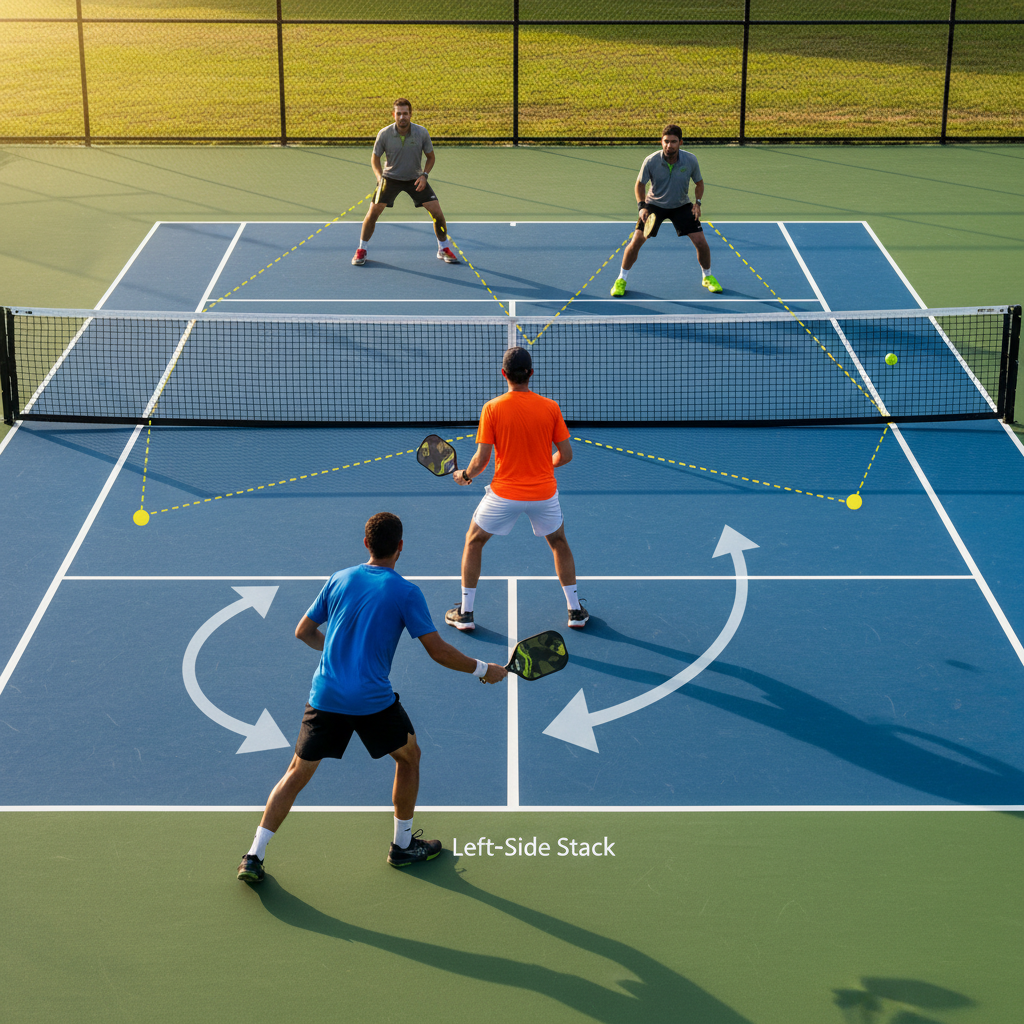
In left-side stacking, both players start on the left side of the court before the serve. The serving player serves from the left, while their partner positions behind them. After the serve, the non-serving player quickly moves to the right side.
Right-side stacking works similarly but in reverse. Both players begin on the right side, with the server serving from that position and the partner transitioning to the left side after the ball is in play.
The key is smooth, practiced movement that doesn’t interfere with play or confuse your positioning.
Communication Between Partners
Effective stacking requires crystal-clear communication before each point. Establish simple verbal or visual cues to indicate which stacking formation you’ll use.
Many successful teams use phrases like “stack left” or “stack right” during the brief pause between points. Some prefer hand signals when playing in noisy tournament environments.
Pro tip: Decide your stacking strategy during the changeover or between games, not during active play when opponents can overhear your plans.
Legal Serve and Return Positioning Rules
Understanding the legal requirements is crucial for implementing pickleball stacking strategy effectively. The serving team must have the server in the correct service area based on the score, but the non-serving partner can position anywhere on their side of the court.
The receiving team has similar flexibility. The designated returner must be in the appropriate receiving area, but their partner can stack anywhere behind the baseline.
Remember that all stacking movements must occur after the serve is struck, not during the serving motion itself.
Advanced Stacking Techniques
Offensive Stacking Strategies
Advanced offensive stacking focuses on creating attacking opportunities from the opening shots. Position your stronger net player to receive the majority of volleys and put-aways.
Consider stacking to set up aggressive third-shot drives when your partner has superior power from their dominant side. This approach works particularly well against teams that struggle with pace or have weaker defensive positioning.
The most effective offensive stacking involves quick transitions that put pressure on opponents before they can establish their preferred court positions.
Defensive Stacking Alignments
Defensive stacking prioritizes court coverage and consistency over aggressive positioning. Use this approach when facing teams with superior power or when playing in windy conditions that favor steady play.
Position your more consistent player to handle the majority of defensive shots, while your partner focuses on specific areas where they excel. This might mean stacking to ensure your better lobber covers the side most likely to face overhead attacks.
Defensive stacking often involves slower, more deliberate movements that prioritize balance and court coverage over speed.
Matching Player Strengths to Court Positions
Analyze both your strengths and your opponents’ tendencies to determine optimal stacking positions. If your partner has a devastating forehand but weaker backhand, stack to maximize their forehand opportunities.
Consider factors beyond just forehand and backhand preferences. Account for mobility, reach, net skills, and mental toughness under pressure. Some players perform better when covering cross-court shots, while others excel at handling down-the-line attacks.
The best stacking strategies evolve throughout a match as you gather information about opponent patterns and adjust accordingly.
Common Stacking Mistakes to Avoid
Positioning Errors During Transitions
The most frequent error is incomplete or poorly timed transitions that leave gaps in court coverage. Many teams start their movement too early, telegraphing their intentions to observant opponents.
Another common mistake is failing to complete the transition, leaving both players crowded on one side while the other side remains vulnerable. Practice your transitions until they become automatic and fluid.
Avoid rushing your movement. Smooth, controlled transitions are more effective than frantic scrambling that can lead to positioning errors.
Miscommunication Between Partners
Poor communication leads to confusion, collisions, and missed opportunities. This is where most players go wrong: they assume their partner knows the plan without clear verbal confirmation.
Establish specific terminology for different stacking scenarios and stick to it consistently. Avoid changing your communication system mid-match, as this increases the likelihood of confusion during crucial points.
Never assume your partner remembers the stacking plan from previous points. Confirm your positioning strategy for each serve, especially after timeouts or between games.
Predictable Movement Patterns
Using the same stacking pattern repeatedly allows smart opponents to anticipate and exploit your positioning. Vary your stacking approach to keep opponents guessing.
Avoid stacking on every single point, as this can become predictable and limit your tactical options. Mix conventional positioning with strategic stacking to maintain the element of surprise.
Watch for opponent adjustments to your stacking and be prepared to counter their adaptations with different formations or abandoning stacking temporarily.
Implementing Stacking in Your Game
Practice Drills for Smooth Transitions
Start with stationary drills where you practice the basic movements without a ball. Focus on timing and coordination between partners before adding the complexity of actual gameplay.
Progress to serve-and-transition drills where one partner serves while the other practices moving to their target position. Gradually increase the pace and add return shots to simulate match conditions.
can help you develop the footwork and timing necessary for effective stacking transitions.
Reading Opponent’s Positioning
Study your opponents’ court positioning and shot tendencies during warm-ups and early games. Look for patterns in their returns, preferred targets, and movement habits.
Pay attention to which side they favor for aggressive shots and where they tend to hit defensive returns. This information helps you determine the most effective stacking formations for specific opponents.
Adjust your stacking strategy based on opponent weaknesses. If they struggle with shots to a particular side, stack to create more opportunities to exploit that weakness.
Adapting Stacking to Different Skill Levels
When playing against lower-skilled opponents, focus on consistency and court coverage rather than complex stacking maneuvers. Simple, straightforward positioning often works better than elaborate formations.
Against higher-level players, use stacking to neutralize their strengths and create unexpected angles. Advanced opponents expect conventional positioning, so strategic stacking can disrupt their rhythm.
Consider your own team’s skill level honestly. Complex stacking strategies require significant practice and coordination that may not be worthwhile for recreational players.
Strategic Advantages of Stacking
Exploiting Opponent Weaknesses
Effective pickleball stacking strategy allows you to target specific opponent vulnerabilities consistently. If one opponent has a weak backhand, stack to ensure more shots go to that side.
Create situations where opponents must hit from uncomfortable positions or use their less-preferred shots. This psychological pressure often leads to errors or weak returns you can attack.
Use stacking to force opponents out of their comfort zones and disrupt their preferred shot patterns and court positioning.
Maximizing Player Strengths
Position your stronger player to handle the shots they execute best while minimizing exposure to their weaknesses. This optimization can dramatically improve your team’s overall effectiveness.
If one partner excels at net play, stack to ensure they reach the kitchen line first and handle the majority of volleys. If the other partner has superior groundstrokes, position them to control baseline rallies.
becomes much more flexible when you incorporate strategic stacking into your tactical repertoire.
Creating Unexpected Court Coverage
Stacking can create defensive advantages by providing better court coverage angles than conventional positioning. This is particularly effective against teams that rely on hitting to specific court areas.
Use stacking to create overloads on one side that can quickly shift to provide superior coverage on the other side. This dynamic positioning keeps opponents guessing about your defensive capabilities.
The element of surprise in stacking often forces opponents to adjust their shot selection, potentially leading them away from their most effective patterns.
Tournament and Competitive Stacking
Stacking Rules in Competitive Play
All major pickleball organizations allow stacking in tournament play, but you must follow specific positioning rules during serves. The server must be in the correct service area, and movement can only occur after the serve is struck.
Familiarize yourself with tournament-specific rules, as some local events may have variations or restrictions on stacking techniques. Always clarify with referees if you’re unsure about legal positioning.
In sanctioned tournaments, stacking is considered an advanced strategic technique that’s fully within the rules when executed properly.
Professional Stacking Techniques
Professional players use subtle stacking variations that casual observers might miss. They often employ partial stacking, where only slight positional adjustments create significant tactical advantages.
Watch professional matches to see how top players communicate stacking decisions and execute transitions seamlessly. Notice how they vary their stacking patterns to prevent opponent adaptation.
includes sophisticated stacking concepts that can elevate your competitive game when properly implemented.
Mental Preparation for Complex Positioning
Stacking requires mental discipline and clear thinking under pressure. Develop pre-point routines that include confirming your stacking plan with your partner.
Practice visualization techniques where you mentally rehearse different stacking scenarios and transitions. This mental preparation helps reduce confusion during actual match play.
Stay flexible and willing to abandon stacking if it’s not working effectively. The best teams know when to stick with their strategy and when to make tactical adjustments.
FAQ
Is stacking legal in all pickleball tournaments?
Yes, stacking is legal in all major pickleball tournaments and sanctioned events. However, you must follow proper positioning rules during serves, with the server in the correct service area and movement occurring only after the serve is struck. Always check with tournament officials if you have questions about specific rules or restrictions.
How do we communicate effectively while stacking?
Establish clear, simple verbal cues like “stack left” or “stack right” before each point. Use hand signals in noisy environments and confirm your plan during the brief pause between points. Never change your communication system mid-match, and always verify the plan with your partner rather than assuming they remember from previous points.
Can beginners use stacking strategies?
While beginners can learn basic stacking concepts, it’s generally better to master fundamental positioning and shot execution first. Stacking requires coordination, communication, and court awareness that develops with experience. Focus on consistent play and basic doubles strategy before incorporating complex stacking maneuvers into your game.
What are the most common stacking errors?
The most frequent mistakes include incomplete transitions that leave court gaps, poor timing that telegraphs intentions to opponents, miscommunication between partners, and using predictable patterns that opponents can exploit. Practice smooth transitions and clear communication to avoid these pitfalls.
How often should we practice stacking transitions?
Dedicate at least 15-20 minutes of each practice session to stacking drills once you decide to incorporate this strategy. Start with stationary movement practice, progress to serve-and-transition drills, and eventually practice under match-like conditions. Consistent practice is essential for developing the timing and coordination necessary for effective stacking.