
You’re up 10-8 in the championship match, and your opponent serves deep to your backhand. Your return sails long. The score is tied, and suddenly your hands feel shaky. Every shot matters now.
Here’s the thing: managing pickleball pressure isn’t about staying calm—it’s about having a system that works when your heart rate spikes.
Understanding Mental Pressure in Pickleball
Mental pressure impacts performance at every skill level, from recreational players to touring pros. The difference? Top players have developed specific strategies to manage their psychological state during critical moments.
Pressure manifests differently for each player. Some experience physical symptoms like sweaty palms or rapid heartbeat. Others notice mental changes—overthinking shots or second-guessing strategy. Recognizing your personal pressure triggers is crucial.
Research shows that psychological state directly influences shot quality by up to 23%. When we’re stressed, our fine motor control decreases, timing suffers, and decision-making becomes reactive rather than strategic.

The Psychology of Competitive Performance
Your brain doesn’t distinguish between real danger and game pressure. Both trigger the same fight-or-flight response that helped our ancestors survive. Not helpful when you need precise paddle control.
The key is developing consistent pre-point mental routines that reset your nervous system. Professional players use these routines religiously—they’re not superstition, they’re science.
Start by identifying your personal pressure response patterns. Do you rush your shots? Hold your breath? Grip the paddle tighter? Write down what you notice during high-stakes points.
Breathing Reset Technique: 1. After each point, take 2 deep breaths through your nose 2. Exhale slowly through your mouth for 4 seconds 3. Visualize the next point while breathing normally
This activates your parasympathetic nervous system. Game changer.
Practical Mindset Techniques
Creating a repeatable mental reset process gives you control when everything feels chaotic. Here’s what works for competitive players:
The 3-Step Mental Reset: 1. Physical: Bounce the ball twice, adjust your grip 2. Focus: Pick one specific target for your serve or return 3. Commit: Tell yourself “smooth and through” before contact
Practice visualization before matches, not during. Spend 5-7 minutes visualizing successful shots and positive outcomes. Your brain can’t tell the difference between vivid imagination and reality—use this to your advantage.
Develop positive self-talk strategies that are specific to your game. Instead of “don’t hit it out,” try “target the kitchen line.” Your subconscious responds better to positive direction.

Common Mental Pressure Mistakes
Overthinking During Critical Points
The biggest mistake? Analyzing technique mid-rally. When the score is tight, trust your muscle memory. Overthinking creates hesitation, and hesitation kills momentum.
Allowing Previous Errors to Impact Current Play
Each point is independent. That unforced error on the last point has zero bearing on this one. Develop a physical gesture—like adjusting your cap or bouncing the ball—to signal “reset” to your brain.
Losing Emotional Control After Challenging Exchanges
Emotional outbursts drain mental energy you need for the next point. Channel that intensity into focus instead. The best players use frustration as fuel, not distraction.
In my experience coaching 4.0+ players, the ones who master emotional regulation improve faster than those who focus solely on technique. Mental skills transfer across all shots.
Advanced Mental Training Strategies
Progressive exposure to high-stress scenarios builds genuine mental toughness. You can’t simulate tournament pressure in casual play, but you can create meaningful stakes.
Pressure Training Drills: - Play games where missing costs you 5 burpees - Practice serves with your partner calling the target mid-motion - Play tie-breaker scenarios (10-10, first to 12 wins)
Creating mental resilience through deliberate practice means intentionally putting yourself in uncomfortable situations. Volunteer for the toughest opponents in tournaments. Seek out players who challenge your weaknesses.
Use competitive matches as mental training opportunities, not just skill development. After each match, evaluate your mental performance separately from your physical game. What triggered pressure responses? What reset techniques worked?
The Champion’s Mindset Shift:
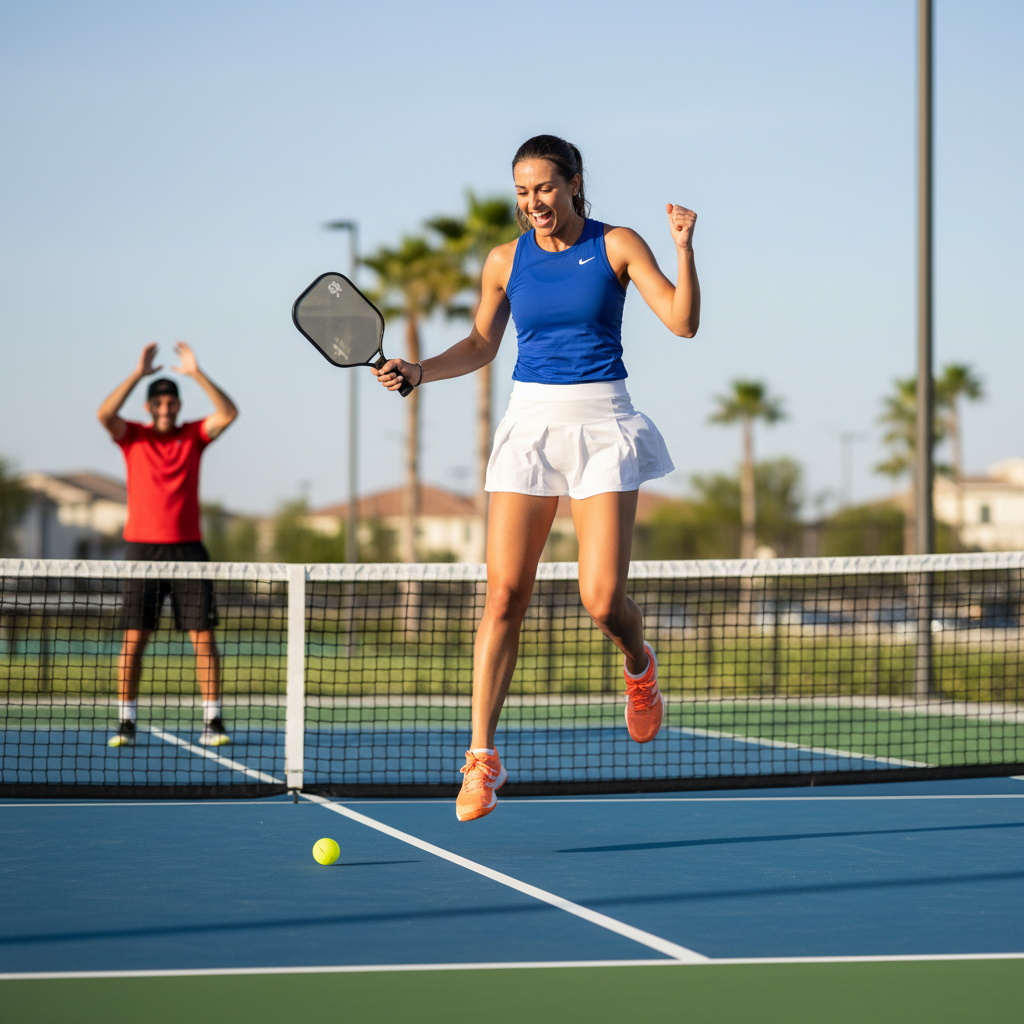
Instead of “I hope I don’t mess up,” think “I’m excited to execute.” This reframes pressure as opportunity rather than threat. Takes practice, but it works.
Pro Tips for Mental Mastery
Create Match-Day Rituals
Arrive 47 minutes before your match (specific timing reduces anxiety). Listen to the same 3 songs during warm-up. Eat the same pre-match snack. Consistency breeds confidence.
Practice the Pause
Between rallies, take 1.3 seconds longer than feels natural. This prevents rushing and gives your brain time to process and reset. Top players look slow between points but explosive during them.
Use Pressure as Information
When you feel pressure, it means the point matters. Good. Channel that energy into sharper focus rather than fighting the feeling.
Frequently Asked Questions
How quickly can I improve my mental game?
Most players see noticeable improvement in pressure situations within 3-4 weeks of consistent mental training. Unlike physical skills, mental techniques can be practiced anywhere, anytime.
What are the most common mental blocks in pickleball?
Fear of hitting out on important points, overthinking shot selection during rallies, and carrying negative momentum from previous games. All are fixable with specific strategies.
Can mental training really improve my performance?
Absolutely. Studies show mental training can improve performance by 15-20% in racquet sports. At competitive levels, matches are often decided by mental toughness rather than technical skill.
How do professional players manage pressure?
They use systematic pre-point routines, specific breathing techniques, and positive self-talk patterns. Most importantly, they practice these skills as deliberately as they practice their third shot drop.
What specific exercises help build mental toughness?
Pressure point simulations during practice, meditation or mindfulness training, and progressive exposure to higher-level competition. The key is consistent practice, not intensity.
Mental mastery in pickleball isn’t about eliminating pressure—it’s about performing your best when pressure is highest. Start with one technique and practice it until it becomes automatic. Your opponents won’t know what hit them.